Mathilde Charpail

Summer time consciousness

Planning summer vacations or weekend escapes is requesting special attention to your wardrobe. More precisely, you need to think about garments, their utility, comfort and benefits.


We will reveal most trendy and breathable summer fabrics that will make you profit this season of sun and joy even more.

 Cotton

Being a highly breathable fibre with capacity to absorbs a decent amount of moisture, cotton has an open weave which allows air to circulate through the fabric. Moreover, cotton is hypoallergenic, comfortable, natural and versatile. Variety of use of cotton goes from Hersey to corduroy and denim. Cotton is easy to care and easy to wear.

 Best cotton fabrics solutions would be ones with GOTS certificate, which will illustrate it sustainable origin, fair-trade and biodegradability.

 Linen

Great casual and sustainable option for summer. Made from flax and being one of the most durable and oldest fabrics, linen has light weave which allows fabric to be one of the most breathable. Moreover, linen has an incredible antibacterial and cooling properties much appreciated in summer .

 Hemp

Natural fibre that provides UV protection, resist bacterial growth, preventing odours and has great breathability. Interesting fact about hemp is that it is becoming stronger with every wash and retains color better than any another fibre. Hemp fibre is the most resistant and hypoallergenic option.

 Tencel

Being extremely soft and one of the most sustainable man made fibre, tercel is a great option for hot summer. It supports body natural thermoregulation and keeping your skin being dry and cool. Tencel is hypoallergenic and moist absorbent and it is provides extreme comfort to your skin.

 Silk

Lightweight, natural and wrinkle resistant silk fabric is a great chops for summer. Being thermoregulating, hypoallergenic and anti ageing option, silk fabric will upgrade any of your summer looks by its luxurious and glossy surface.

 Choosing natural and breathable fabrics, will bring good to your skin and mood. Moreover, it does became trendy and smart option for everyone.


Writter: Ulyana Sarana - Founder of Eco Showroom. Eco showroom - is a unique concept of B2B interaction during Paris Fashion Week that aims to bring conscious shopping to the next level.  Brands showcasing their products together with contemporary artists meanwhile meeting high end buyers. 


JulieMay: the allergy-friendly sustainable option

What is the origin of JulieMay? What reveals your brand concept?

JulieMay was founded on the story of mother and daughter. When Julie developed a skin rash after the birth of her second daughter, Tiffany looked for a way to help her mum find a sustainable way to treat her rashes. Deciding to leave Edinburgh University, where she was studying law, Tiffany took up finding innovative ways to design lingerie to support her mum, which later transpired into a passion for helping other women find comfort and to regain their confidence through feeling included in a huge market that wasn't designed to support them.

JulieMay is an allergy-friendly lingerie brand. Made with GOTS-certified organic pima cotton and soft silk, JulieMay’s lingerie is super comfortable and allergy-friendly for those with sensitive skin. No synthetic fibre, latex/nickel free, no exposed elastane nor harsh chemicals. Comfort with great support.

Our products have been tested by dermatologists and certified by the Allergy Free UK. Many of our customers have regained their confidence and comfort as our products are feminine, allergy-free, sustainable, and ethically made.

What does the word “Sustainability” mean to you and how do Sustainability issues impact you as a brand?

JulieMay Lingerie has three unique brand values:

  • Allergy-Friendly: Allergy-Free UK has certified all my products to be friendly for people allergic to synthetic fibres, latex, elastic and sensitive skins;

  • Organic: we use Certified Organic Pima Cotton as the main fabric to make the collections luxuriously soft; We only use eco-friendly detergents and softeners during the washing. No harmful dyes and bleach are being used.

  • Ethical: At JulieMay, all products are made at the exclusive production site, conforming to sustainable, environmental-friendly, and fair wage standards. We use recycled and recyclable paper packaging. And we are conscious of the energy and water usage during production. We use a small vat to minimize water usage during the dyeing process.

At JulieMay Lingerie, we always have a sustainable-first ethos, with thoughtfully-made products responsibly manufactured from premium fabrics crafted from Organic Pima Cotton.

What is your strongest commitment in terms of Sustainability in your business? What could you do better?

As a sustainable brand, we work with Greenspark. With every order our customers place, we plant trees in the Eden Reforestation Project, an UN-endorsed project in Nicaragua. We also donate part of our sales to support the Plastic Bank project to help over 5,000 people in Haiti, Brazil, the Philippines, and Indonesia earn a fair, sustainable income by collecting plastic waste. We continue to expand our impact via our partner Greenspark to support more projects like Hydroelectric Energy in Chile and improving cookstoves in Malawi to offset our carbon footprints. JulieMay Lingerie is making a big impact on the existing market and providing the best underwear in the allergy-free market.

At JulieMay, we’re passionate about empowering women, so we have partnered with Uncommon Threads.

Uncommon Threads is a nonprofit empowerment boutique for women based in Lawrence, Massachusetts, one of the poorest cities in the USA. They help low-income women see and feel their true potential with clothing and images to build self-esteem and self-worth.

We also partnered with the University of Portsmouth to support their research in Breast Health. And we are looking to create so much more and give back to our female UK communities.

We are in the process of working with more amazing charities that work with recycling bras to donate to women in need in the US and around the world and with charities supporting people touched by breast cancer.

What are your main objectives for the next 5 years?

We will keep growing in the UK and expand to the US and Australian markets as we see potential there. We are selling B2B to local boutiques and looking to reach a wider market. We hope to continue growing our community of beautiful women and empowering them to feel confident in themselves.

What is THE product that at best represents and defines JulieMay? And why?

I will say Ashley because the brand's mission is to make comfort bras elegant and feminine. We want to convey that comfort bras can also be attractive and sexy. Many customers find confidence in wearing our collection and, most importantly, feel comfortable without any skin reaction.

10% discount on the first order.

Sustainable Fashion: The Ins and Outs of Clothes Recycling

Would you like to live a zero-waste, sustainable life?  Well, here are some bite-sized recycling facts for you. Did you know that in the US alone, more than 16.9 million tons of textile end up as waste on a yearly basis? Also, the lifetime of an average item of clothes is as little as three years. And considering that we produce millions of tons of clothes each year (in 2018 alone it was around 17 million), that puts into perspective just how much of it ends up wasted. In other words, for every item we produce, we discard at least one.

It’s no wonder, then, that so many people are looking into sustainable fashion and different methods of recycling clothes and fabrics. So, if you have any interest in learning more about this practice, then you’ve come to the right place. This article will serve as your brief introduction to the world of sustainable fashion and all of its elements.

Why Recycle At All?

As stated earlier, millions of tons of fabrics end up in landfills. An average piece of fabric can take up to several years to decompose properly, depending on what material it contains. During the decomposition, it can release huge amounts of CO2 and methane, both of which are harmful to our atmosphere. But more importantly, some of the materials used in modern clothing are not biodegradable. In fact, they can take anywhere between 20 and 200 years to decompose naturally!

Because of the different types of materials that a single item might contain, clothes can be incredibly hard to recycle. Yet, people still do it. The reason behind that decision is rather simple. If we can make a difference and keep our world clean and zero-waste, we will leave no stone unturned. That also includes the challenging task of recycling old clothes and fabrics. And we should point out that sustainable fashion includes more than just recycling. But we will get more into that later.

What Is Sustainable Fashion?

In the simplest terms possible, sustainable fashion refers to clothing and general wear that we design, manufacture, distribute, and use in ethical and environmentally friendly ways. It’s a trend so popular nowadays that even massive multinational brands. In fact, the United Nations even has an initiative entirely dedicated to sustainable fashion practices.

Generally speaking, you are a proponent of sustainable fashion if you care about answers to these particular questions:

●      Where is my clothing item made?

●      What does my item contain?

●      Can my item degrade naturally without polluting the environment?

●      How is my item manufactured?

●      Can my item be reused safely?

●      Can my item be reused in different, environmentally acceptable ways?

●      Are there ways I can buy other items that will not result in harming the environment?

●      Can I use materials from my old item in order to create a new one?

●      If I have to discard my item, can I do it in a green, safe manner without disrupting anything or anyone in the process?


Engaging in Sustainable Fashion

Donating Old Clothes and Fabrics

By far, the quickest way you can get rid of old clothes without throwing them away is to donate them. Some of the go-to places are Goodwill, the Red Cross, and the Salvation Army. However, don’t limit yourself to these organizations. In fact, you can check out one of many alternatives out there, both locally and (inter)nationally. Even a worn-out piece of clothing can help a less fortunate soul to keep warm during the upcoming cold, winter nights.

In addition, go around your local churches, mosques, synagogues, and other religious organizations and ask if you can help with a donation. Orphanages and homeless shelters are also a good bet.

Buying Second-hand

Second-hand shops and thrift stores are a treasure trove of amazing items. You can get anything from slightly used coats to brand new shoes and even different accessories. Not only will you keep an item away from the landfill, but you’ll also be getting it for a fraction of its original price. In fact, you might even replenish your wardrobe for the next ten years at a ridiculously low price.

Of course, there is another useful aspect to second-hand shops. While most of them buy in bulk, some will accept individual items. So, ask around and see which stores will take your own old items. You can even donate them for free if you don’t have any room for them in your home.

Buying from Sustainable Brands

As we stated earlier, sustainable fashion is so popular that some of the biggest brands out there are embracing it. Of course, you can find some other, smaller brands online, but always make sure to do your research. After all, there are plenty of brands in other industries that lie about their sustainability policies, and the fashion market is no different.

Finding the Proper Recycling Facilities

If you have a ton of old rags and clothes that you can’t really reuse in any tangible way, you can try recycling them. The best way to go about that is to find a proper facility near you that will take said fabrics. Each facility follows strict rules and regulations when it comes to textile recycling in order to achieve optimal results.

Returning the Item to the Manufacturer

Interestingly enough, certain brands will actually accept an old item of theirs if you return it for recycling. More often than not, these brands have connections to recycling facilities and they exchange their old clothing for a set rate. A few other brands will even accept clothing from other brands for that same purpose. Shoe companies do the same thing with old footwear, as do handbag manufacturers.

Final Thoughts

Really, sustainable fashion can be reduced to a few simple quips. If you can wear it, wear it. If you can’t wear it, donate it. You can’t wear it or donate it? Then you’ll reuse it, upcycle it, or recycle it. As long as you can avoid sending it to the landfill, you’ve done your part in keeping fashion sustainable and the planet safe.

How to Revamp Your Closet Without Throwing Anything Away

If you’re looking to switch up the clothes in your closet after a long year, hold off on throwing anything out. For one, that’s a big waste of your hard-earned money! If your clothes don’t have any holes or tears in them, hang on to them for now. After all, you can revamp your wardrobe without necessarily dumping any of the clothes or accessories that you haven’t worn in a while into the bin.

This idea might come as a surprise to you, especially if you’re used to going on online fashion shopping sprees whenever you wanted a new look. However, you don't always have to buy entirely new clothes to make up a whole new outfit. While you can still go online to shop hosiery, tights, and other articles of clothing, you may find it more fulfilling to work with what you already have.

Ready to switch things up with your current collection of clothing? Here are a few tips on how to re-organize your closet without throwing anything away:

Go Through Your Closet in Phases

Before you begin your revamping and reorganizing journey, there’s something you should know about re-organizing a cluttered closet. It’s not like the movies at all, where you go through a one-night overhaul of your wardrobe alone or with a friend.

Unfortunately, this process doesn’t work for everyone. Indeed, you may just find that dumping out everything from your closet onto your bed and going through each piece one by one with fresh nostalgia will do little to help you out. In fact, you might get stuck on keeping items you never wear but still feel attached to if you go about things this way. More than that, though, trying to do everything in one fell swoop can be extremely overwhelming, and you may give up before you even make it halfway through the pile.

So, instead of completely dumping out your wardrobe onto your bed, consider segregating your closet into manageable sections based on clothing types first. For instance, you can go through your tops first, and then your bottoms. After this, you can go through full-length pieces like dresses and formal wear. If you keep any of your accessories like belts, hats, and bags in there, you can go through them last.

You don’t have to do all of this in one day, either. For instance, you can schedule a specific day to go through your tops, then schedule a separate date for your bottoms. If you find yourself getting tired easily, you can also break these up into shorter sessions. Instead of spending hours organizing your tops, try taking just ten minutes to do so each day. Eventually, you’ll be done with the whole closet before you know it.

After you go through these steps, you’ll have a better gauge of how many things you already do own, and where each one figures in the hierarchy of things you’d still like to wear. You may just rediscover some old but still classic pieces that you can reintegrate into your daily attire. Another possibility is coming across items that used to be your favorites but got shoved to the back of the closet and forgotten about.

Create an Inventory of Your Wardrobe

If you own a lot of fashion items, it’s a good idea to keep an inventory of your clothing and accessories. This helps you keep tabs on the things you’re checking out and will prevent you from going over something you’ve already looked at in the past hour. This means concretely listing down all the fashion items you own. Then, you should make a note of whether you wear these items a lot, haven't worn them in a while, or are still planning to wear them in the future.

Doing this will make you think more carefully about the pieces in your closet and how to go about arranging them. When it comes to organizing your closet, you’ve got to be serious about making that change in your life. Another benefit to creating an inventory of your clothing is that you can more easily determine what kinds of ensembles you can create based on what you already own.

You can do this with a simple pen and paper, or you can go the extra mile by creating a spreadsheet on Microsoft Excel or Google Sheets. If you want more flexibility, you can even create a database using Airtable or Notion.

Make New Outfit Combinations with Existing Pieces

You don’t have to look far to come up with novel outfits. It’s likely that your existing wardrobe already has a new ensemble waiting to surprise you. Odds are, you just haven’t tried out that specific outfit combination yet with the pieces you already own.

So, it's time to break away from your usual get-ups and look for other attires you can create by mixing and matching your clothes in unusual ways. This also gives you the chance to try your old clothes on in novel ways. By doing this, none of your current clothes will be wasted, and you get to breathe new life into your older pieces, too.

Do you find it difficult or tiring to put on and take off your clothes over and over while trying to create new outfit combinations? Don’t worry. You can download digital apps that let you take photos of and create a visual inventory of your clothes and accessories. There, you can literally mix and match tops, bottoms, footwear, and jewelry onto virtual mood boards. It also gives you a fresh new perspective, since you’ll be doing it away from your mirror, where you usually check how your outfits look on you. Play around with these apps for a bit, and you may just come up with new ensemble you never thought of trying out before!


When it comes to re-organizing your wardrobe space, it really will help if you get creative with it. We don’t just mean maximizing all possible spaces to put your clothes in, although that’s certainly important. We also mean figuring out the possible clothing combinations you can come up with and figuring out how they match in your wardrobe. Indeed, bringing new life to your existing clothes is one way you can make sure that nothing is ever wasted or completely dispensable.

How to Fix Saggy Pants

All clothes begin to show signs of wear and tear eventually. When it comes to pants, tights, and the like, they might begin to sag around the knee or waist area after a while. If you have a pair you wear more often than others, this might cause a bit of a problem. No one wants to go out with ill-fitting bottom wear, but the more you wear the same jeans or leggings, the quicker the sagging will start. However, there are ways to prolong the tautness of your bottom wear and avoid sagging in unwanted areas. 

What Causes Sagging?

More often than not, sagging is caused by too much folding at crucial areas in your pants. As mentioned earlier, the loose fabric tends to occur at the knees or even the waist area. This usually happens because you bend at these areas the most, creating creases that stretch and weaken the fabric over time. 

A preliminary tip to prevent your pants from losing their form is to sit in a way that won’t crease your pants at the knees. Avoid crossing your legs and try to keep them as straight as possible. Alternatively, you can gently pull the legs of your pants a bit before sitting down to hitch them up and minimize the tension on the fabric when you bend your knees. 

Now that we’ve started with a few tips on how to avoid sagging, here are some more notes you can take from us on how to fix it when it happens:

Be Aware of The Material You’re Working With

The more stretch the material of the fabric has, the less likely it will crease and sag quickly. That said, you can opt to shop for cotton leggings today or check out other stretchable fabrics, like recycled nylon or polyester.

Different materials also have different care directions. Check the label for any specific instructions there might be for your garments so you can maximize their wearability. 

Wash Properly and Appropriately

Once your leggings start to show signs of sagging, stop the problem from getting worse by washing the garment in your washing machine using the hottest cycle possible. This will shrink your clothes and help them fall back into shape. On the other hand, if you’re trying to stop your jeans from sagging, handwash them in cold water. Iron them out to restore their form and soften the fabric as well. 

Knowing what type of wash you should do for different kinds of clothing will prolong its lifespan. At the same time, if sagging has already begun, you can give it a quick fix with any of the wash tips stated above. 

Segregate Clothes During Washing

Different types of clothes will demand different types of care. The stretch of the fabric can be affected by the way the garments are handled during washing, which is why it’s important to segregate your clothes when you do your laundry. Remember that less elastic and more stiff fabrics like jeans will require different settings from more elastic bottom wear made of thinner material, like leggings. 

Segregate your laundry properly and wash garments according to the appropriate settings. If a garment doesn’t have care instructions and the type of material isn’t indicated on the label, launder it together with other fabrics that have a similar thickness and feel. 

Use The Right Wash Formula

While we’re on the topic of washing your pants correctly to prevent sagging, it’s also important to know the right formula to wash your pants in. Getting the right mix of detergent and water for washing your jeans, leggings, or tights is crucial to maintaining its form. Check the detergent for the correct amounts to use for your load and follow the dilution instructions. 

Air Dry Instead of Using The Dryer

One care tip that pants and leggings do have in common when it comes to fixing sagging is to air dry instead of using a dryer. Air drying will prevent the fabric from getting stretched out. However, if air-drying is really not an option, you can tumble dry your bottom wear at the lowest setting for the shortest possible period. 

If sagging has already commenced, you can try shrinking your clothes back to their original size by using a hairdryer. Put it on the warmest setting and focus the heat on the sagging areas immediately after taking your clothes out of the washing machine. 

Fold Your Pants

Instead of putting your pants on a hanger, fold them to store. This is especially true for pieces made of heavier fabrics like jeans. This is because the weight of the hanging fabric can pull on the rest of the fibers and cause the shape of the garment to become distorted. While this is mostly the case for jeans, try storing your leggings and tights this way as well, as the tension on a hanging garment can still overstretch leggings and tights. 

To make sure you’ve folded your pants properly, shake them out to avoid wrinkles and creases from forming, especially around the bottom hem. Once you’ve got that settled, smooth out your pants on a flat surface and start folding. 

Use A Belt

Hitching up your pants before sitting down to prevent overstretching them with your knees is helpful, but if you’re likely to forget, try wearing a belt with your jeans instead. Belts help to keep your pants up and maintain their form over your body. While you can’t use this tip for leggings and tights, opting for a high-waist design can offer the same effect and secure the waistband from getting pulled down when you bend over. 

Conclusion

Before tossing out any pants or leggings that have gotten saggy, try the tips above to restore them to their original shape. If you do need new ones, remember that sagging is preventable if you make sure to care for your clothes correctly. By being mindful of your movements and following the care guidelines for your garments, you can extend their lifespan and ensure that they maintain the right fit on your body. 

Buy right: how to source the most sustainably produced leather

The adoption of cleaner production techniques and the increased accountability of manufacturers is making it easier to source sustainable and ethically produced leather. Here’s how to ensure you’re buying the good stuff.

Responsible leather producers and their trade bodies are working hard to improve standards. Tanneries have become cleaner, using fewer chemicals and reclaiming them for re-use while new techniques are constantly emerging to improve environmental performance and reduce impacts. Processes have been refined to the extent that the amount of water used in leather production has been cut by 35% in the last 25 years. And, with the reuse of water, that reduction is continuing.

The leather industry is also making strides in creating a transparent supply chain, making it easier for the consumer to check for best practice along every part of the process – from cow to final product. The key is to know which labels, certifications and terms to look out for – and which ones to avoid.

Buy premium

Price, as with almost everything, can be a factor in ensuring leather goods are sustainably produced. If you are buying from a high-end, luxury producer, you can be fairly confident they will abide by best practice. Their profits are derived from great design and craftmanship and they won’t compromise that by using anything but the highest quality leather from producers who are certified to the highest standards.

The best producers should be open about their supply chains. If you need further reassurance, check the corporate responsibility and sustainability sections on their websites.

Look for the Leather Working Group or Sustainable Leather Foundation logos

The Leather Working Group (LWG) and Sustainable Leather Foundation (SLF) provide environmental audits and traceability standards.  Brands and retailers can use the logos on their website to indicate that they are using leather products that have been audited.  Alternatively, ask your brand or retailer to support their environmental claims through traceable standards. If in doubt, you can check out consumer information for an LWG member here or for an SLF member here.

Choose regenerative

Also, when making a purchase, keep an eye out for the next big thing: ‘regenerative’ leather. It’s not yet mainstream but footwear and apparel brand Timberland is blazing a trail with its verified, fully traceable regenerative leather supply chain and Mulberry has recently outlined its regenerative intentions. There are also several smaller independent brands that sell it.  

In simple terms, regenerative leather comes from cows that are reared using ecological practices that are good for the animals, the soil and the environment. For example, grass and grazing are a key part of regenerative systems. The idea is that by moving animals around ranches in a way that mimics the natural movement of herds in the wild, the ground benefits. The approach is based on the rule of thirds: graze a third, trample a third and leave a third of the land as grass, which allows plants to regrow and boosts carbon storage in the soil.

Avoid cheap imitations

In your search for the perfect leather item, you might find yourself swayed by the raft of ‘leather’ alternatives claiming to be more sustainable than the real thing. Sometimes called vegan leather, faux leather or leatherette, these ‘leather’ alternatives are typically made from synthetic materials that are non-renewable and oil-based (in other words, plastics). The problem is that when these materials are disposed of, they stick around for thousands of years and can enter waterways, causing harm to marine life.

Even some of the natural alternatives that are growing in popularity, like pineapple or mushroom ‘leather’, use synthetic products as binding agents. So, while they might not use animal products, they are far from the pure, sustainable choice their vegan claims imply. So, do your research before parting with your cash.

Invest for the long term

When you find the sustainable leather that you’re looking for, bear in mind that you’re investing in an item that is the opposite of fast, throw-away fashion. Leather clothing and accessories are durable, improve with age and, with the right care and maintenance, will be a wardrobe staple for many years to come. So, choose wisely and with your eye on the future. That means opting for classic, timeless pieces that transcend fashion fads and trends, and that you can treasure for a lifetime, or several.

About the author: Stephen Sothmann is the founder of Real Leather. Stay Different. – a campaign to promote the beauty, versatility and sustainability of leather and champion slow style over fast fashion. Article facilitated by gtandi.co.uk.

BeFlamboyant: Behind the scene of the sustainable sneakers

What is the origin of Beflamboyant? What reveals your brand concept?

Beflamboyant was born after a trip to Caribbean countries where we realized the impact that the world of fashion has in countries with fewer resources. Being one of the most polluting sectors and with the most precarious employment, we take the reins to act now and improve tomorrow under the motto #doingchange
Our concept is made up of 3 fundamental pillars, animals, the environment, and hard-working people.

What does the word “Sustainability” mean to you and how do Sustainability issues impact you as a brand?

We come from work sectors that are very opposed to the world of fashion but we are lovers of sneakers, in fact, it was our first gift as a couple after we met. However, once we were aware of the social, environmental, and animal impact that this had, we could not continue to be part of the problem.

  1. Protection of animals, we are a 100% vegan brand and our products are registered with The Vegan Society.

  2. Caring for the environment, we use recycled materials, we use zero-waste packaging and we plant a tree for each pair of shoes sold, finally

  3. Workers, we ensure that the workers who manufacture Beflamboyant have fair and dignified working conditions, manufacturing in Portugal and with Spanish, Italian, and Portuguese suppliers.

BEFLAMBOYANT is, therefore, the result of our dream of creating a sustainable and responsible fashion project with the environment, as well as with people and animals, which also aims to have a positive impact in our place of origin, Galicia (Spain ).

What is your strongest commitment in terms of Sustainability in your business? What could you do better?

It is no longer a bet or a fad, sustainability is the future. We do not say that we are sustainable just by using recycled materials, we are sustainable because we combine fair working conditions, we do not use products of animal origin, we protect our forests by planting trees and we measure our impact by auditing all our products and activity, that means that we know how much water is It consumes, how many people are involved, we know that our suppliers are up to date with their obligations both at a personal and environmental level and we also have total transparency.
Therefore our main commitment as a sustainable brand is transparency and awareness of our environmental impact.

Everything can be done better, there is a lot of work ahead, not putting a point to improve would be to admit that we are perfect, and being 100% sustainable is impossible.


What are your main objectives for the next 5 years?


The main brand objectives in the next 5 years are to consolidate the brand in the vegan and sustainable footwear sector, launch a capsule collection of another type of fashion product, and of course, improve our impact on the environment even more and achieve zero waste in the production of our products.


What is THE product that at best represents and defines Beflamboyant? And why?

Beflamboyant_Producto_Square_baja-31SMALL.jpg

It is difficult to choose a product to represent us, each and every one of them represents us in some way, but if we have to choose one we choose the UX68 collection since it is the first collection that we launched on the market through crowdfunding on Kickstarter and it will always be the first collection of our project and we have a special affection for it.

How to organize a clothes swap

A clothes swap SustainYourStyle organized in September 2019

A clothes swap SustainYourStyle organized in September 2019

why it’s inspiring to exchange old wardrobe

“Hey, that’s a nice pullover!”, I hear somebody saying. I look down on me and realize that I’m wearing my favorite white woolen pullover that keeps me warm whenever I start freezing.

My thoughts are being carried away by the memory of a time when I moved from Berlin to Portugal. I barely knew anyone in the country and in my first week of a new job, I met this amazing soul named Juliette which I immediately bonded with. We became really good friends and I’m sure it was no coincidence she was sent on my way.

After some time, vagabond Juliette decided to move on and leave Portugal. Only having a little suitcase she had to get rid of some clothes that she had bought there. And guess what, I was given lots of presents: The bespoken white woolen pullover, jewelry she bought in all kinds of different parts of the world and a lovely leather bag. 

Me in the coziest pullover on earth

Me in the coziest pullover on earth

Today, I’m back in Berlin and I’m still friends with Juliette – although we both live in different parts of the world, far away from each other. I still keep her items very close to my heart, they’re so much more than just items to me, they’re part of my personal story. 

I chose that story as an introduction to this article because it was the beginning of a bigger realization that clothes aren’t just pieces we collect to fill internal needs we can’t fill elsehow. They have a way bigger potential of transporting memories and stories that we can carry with us day by day. 

Do clothes define our personality? 

Let’s start a bit earlier. I was a shopaholic for most of my life. The more the better and as cheap as possible, please. My closet was full of pieces but no life. Realizations like the one I had with my favorite white woolen pullover made me understand that an obsessive way of shopping is just a desperate attempt of filling a hole that is impossible to fill with material stuff – living in a material world we tend to forget that.  

Picture by Sarah Dorweiler

Picture by Sarah Dorweiler

At one point, I was fed up and decided to start an experiment: I would stop buying things for a whole year. Wasn’t easy, to be honest. I had cravings of wearing “something new” in order to enhance my confidence but I didn’t give up on my personal experiment. I kept going and at some point, I realized that all the shopping windows and all the ads would not reach me anymore. 

It was like I gave up an addiction and it would not trigger me anymore. Surprisingly, I started to get more creative in terms of putting my outfits together and I got more compliments for my style than ever. Also, I dug out older pieces of the darkest corners of my closet and started wearing them again. 

That was the moment when I realized how manipulated I was – this realization might have taken me around 6 months. “Wow”, I thought, “it’s crazy how we are made to believe that we need to buy loads of clothes in order to feel valuable.”

As you can imagine, it was an enriching experience on many levels. It led me to many thoughts about how we perceive people and their personalities and which role clothes play in all this.  

How the clothes swaps started for me 

At some point, a friend of mine – who had an extremely big closet as well – offered me to swap some clothes with her. I really liked the idea and we started doing it. 

There were clothes that she didn’t enjoy anymore but I totally fell in love with and vise versa. Such a pleasure to see how different perceptions can be based on our individual tastes. 

We swapped from time to time and I started wearing her clothes with such an appreciation and connection. The secret around this: It’s less about where you bought a piece or how much you spent on it, it’s about the feeling you’re having when you’re wearing it, right? Because you radiate this feeling of appreciation and contentment and others feel drawn towards it. 

Picture by Shanna Camilleri

Picture by Shanna Camilleri

Inspired by this experience, I started doing swaps with a little circle of friends. We would meet in one of our apartments, bring clothes that are in good condition and swap them with each other. 

The result: Every now and then we meet and you see a piece that you had abandoned in your own closet for years, now being worn by a dear friend of yours and shining. I can tell you, this creates such a nice feeling in your heart and definitely makes your lips smile. 

Here’s how you can get started organizing a clothes swap yourself very easily

Having said that, I would love to inspire others to do the same and swap clothes that don’t serve you anymore but might make somebody else very happy. 

To help you get started, we created a little list that explains how to organize a clothes swap: 

 
A clothes swap SustainYourStyle organized in December 2019

A clothes swap SustainYourStyle organized in December 2019


1. Find a cozy place. Depending on the number of people you would like to invite to your clothes swap, you can either organize it in your own apartment or rent an external space for it. If you’re planning to organize it privately and to donate some clothes afterward, some event venues might even give you the space for free – worth asking!  

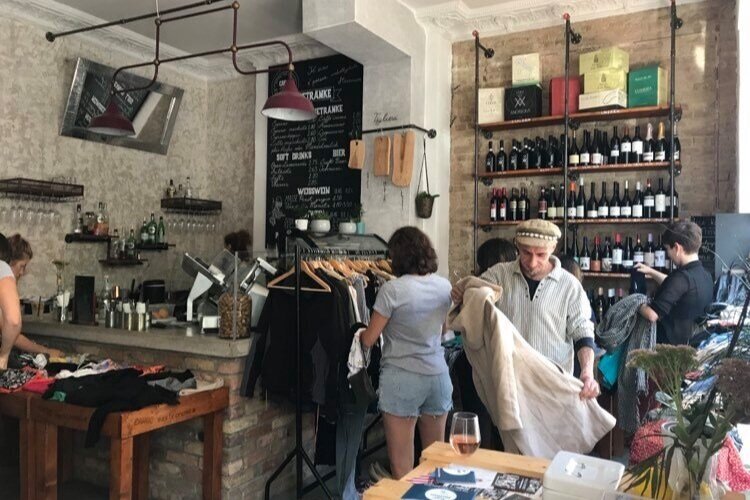
Another idea could be to ask organizers of bigger events if they would like to host a clothes swap. That’s what SustainYourStyle also did at Factory Berlin and it was nice! People could bring one or two pieces with them to the event and swap them at your booth. It would need to be announced beforehand by the organizers so that people can prepare. 

2. Limit the number of pieces. That’s a big one. Before I got to understand this, I ended up with a bunch of pieces that nobody wanted. It’s a good idea to limit the pieces that people are bringing to the swap. Tell them that quality goes over quantity. 

So they bring two up to ten nice pieces that are still in good condition but don’t serve them anymore.

3. Make the pieces shine. It helps to provide a coat stand or shelves in order to make the clothes look nice and not to throw them onto each other. 

Whenever I did a clothes swap at my place, I put clothes hangers so that people could hang their pieces onto them. That helps to see all pieces at one glance without rummaging through all of them and making a mess.

4. No party without snacks and drinks! We all know that cookies, a glass of wine or nice lemonade can be such an upgrade to an event. If you’re organizing something privately, ask people to bring something. By doing so, you make people linger and stay longer. That’s normally where the personal stories start to unfold.

5. Let the magic happen. Sit back and enjoy what you’ve organized. Ask people about their pieces: Where did they get them and why do they want to get rid of them? I’m sure you’ll hear lots of stories that will inspire you.

6. Decide what to do with left-overs. Normally, there will be some pieces left that you will need to decide what to do with. Donating is always a good idea. Another one might be to store them for another clothes swap. 

A clothes swap SustainYourStyle organized in December 2019

A clothes swap SustainYourStyle organized in December 2019

Some experiences and ideas from clothes swapping experts 

In order to give you a deeper insight into the clothes swapping topic, I decided to ask some professionals if they want to share their experiences about swaps. Isabel who’s a member of the SustainYourStyle team and Sabrina and Elena who worked as volunteers agreed to share their opinion with me. I hope it will inspire you as much as they did inspire me. 

Isabel, when and how did you first touch the topic of cloth swaps? 

Isabel wearing a jacket and a pair of jeans from a SYS swap

Isabel wearing a jacket and a pair of jeans from a SYS swap

After years of piling up clothes in my wardrobe that I just wore a couple of times, I sold all my clothes and made a fresh start. I landed in Berlin in 2017 with just a suitcase. It was such a relieving experience to realize that I did not need all the clothes that I gathered for years!

I also started getting myself informed about the social and environmental impacts of fast fashion, and I rebuilt up my closet with clothes from flea markets and second-hand shops.

By 2018 I got familiar with the green scene in Berlin – events, gatherings, and my first swaps. Plan A, a Berlin-based social enterprise helping companies reduce their environmental impact, organized one of the most inspiring swaps I have attended.

I loved the concept, and since then, swapping became an interesting alternative for me.

Why did you fall in love with clothes swapping? / What was the magic about? 

Picture by Amanda Vick

Picture by Amanda Vick

It is fun – just like treasure hunting! Before coming to Berlin, I always felt that I was wearing the same as everyone. And that's reasonable – we all buy from the same fast-fashion chains, and follow the same trends. In my case, I did not find the time to put that to an end. 

Nowadays, and especially in cosmopolitan cities like Berlin, many people broke the social rules and bet for a less uniform and homogenous fashion trend. The most unique, the merrier. 

Back in Jordan, where I lived for nine years, I used to swap items with friends or get clothes from those that were leaving the country for good. 

For me, it was always adorable to wear my friends' garments – it made me feel closer to them and have more vivid memories while wearing those pieces of cloth. 

This is what we try to recreate in our swaps while renewing our closets fun and with a minor environmental impact.


You organized several clothes swaps yourself. What's your favorite story you remember at a clothes swap? 

A clothes swap SustainYourStyle organized in September 2019

A clothes swap SustainYourStyle organized in September 2019

Last summer, many friends of mine started asking me where to buy second-hand clothes or what to do with their unworn garments. So, my flatmate and I organized a small swap in the café she manages. The place is ideal – excellent location, small but cozy, exciting food concepts, and a lovely terrace for sunny days. 

Our swaps are small in size, which allowed us to create this casual and pleasant atmosphere. Totally strangers naturally engaged in conversations about sustainability, fashion, and events in Berlin while enjoying a glass of wine.

For me, it is gratifying to see participants talking to each other about the story behind each item they brought with them. In the first swap, a girl fell in love with a bag I bought on one of my trips to Istanbul. We ended up talking about the bazaars in Istanbul. She came back to the second swap wearing the same bag. She told me how much she is enjoying it. It felt good to see someone was giving it the proper use I could not in years.

Moments like this are pretty typical. It is often to see girls talking to each other when someone is trying on a cloth they brought. "This looks awesome on you! I only wore it a couple of times. You could try on with a black top and a necklace."  

What is still tricky in terms of organizing the swaps, and what needs additional thoughts?

rocknwool-96oddxihsfA-unsplash.jpg

In my opinion, the biggest challenge is to increase awareness about the concept itself. Swaps are not perceived yet as a real alternative to fast fashion or buying new clothes. It is instead conceived as a chance to get rid of worn-out garments, which are difficult to be sold. In other words, swaps are seen as an alternative to donating clothes to charity and not to shopping.

In the beginning, we only established a limit to the items that could be taken to help reduce compulsive consumption. I found this approach quite helpful to avoid ending up with more unneeded stuff in our wardrobe just because they are 'for free.' However, after the last swap, we decided to also set a limit to the items allowed to be brought. 


What's your big vision when it comes to clothes swaps? 

Picture by Artem Beliaikin

Picture by Artem Beliaikin

In the last years, the second-hand and vintage market has grown in popularity to the point that, according to ThredUp, fast fashion could be replaced in a decade. In cities like Berlin, London, New York, or Amsterdam, second-hand or pre-owned clothes are not linked anymore to people with scarce financial resources.

From SustainYourStyle, we consider swapping is an excellent way to reduce our impact and continuously renew our wardrobe without compromising our natural resources. 

On top of that, the swap concept promotes socializing and relation-building, especially in this hectic digital era. This is something average shopping cannot beat!

Sabrina, you volunteered in SustainYourStyle swaps. Did your idea about swaps change after volunteering, and how?

Sabrina who helped us organizing our clothes swaps

Sabrina who helped us organizing our clothes swaps

I’m the typical person that often buys clothes without really needing them or just because they caught my eye in a store. Having bought them, I often don’t even wear them. So it happened that my wardrobe was full of clothes that I don’t wear / don’t even fit in/ don’t even like anymore. 

Normally, I gave them away to people who needed them or sold them. So I always tried to find a solution to get rid of my unused clothes without throwing them away. Then, my friend told me about her idea of organizing a swap party. 

I liked it and I wanted to join in order to help organize it. At the same time, I had the opportunity to find something new and nice I would wear more often. 

This year was the first time I heard about clothes swaps and I volunteered at an event like this. I liked the idea from the very beginning, and it was a very good experience. Seeing the amount of clothes that other people brought to the event made me think about how much we are buying without really needing anything.  

Since the swap experience, I really try to buy less "brand new" clothes and I have more interest in swapping or buying second-hand clothes.

Elena, you also volunteered at our SustainYourStyle swaps. What would you like to share about your experience? 

As it happened to me in many other issues, I started to read and get informed about a specific topic, in this case about the fashion industry. 

Elena wearing a dress she got from a SYS swap

Elena wearing a dress she got from a SYS swap

I realized it has an unethical production model that I completely reject. Yet I never dared to move a step forward and change the way I consume. I guess I did not because of convenience, lack of knowledge or both. 

So, since a friend of mine was organizing a swap, I decided to volunteer. It seemed an interesting experience for me to know different alternatives to the ones we know.  

My idea about the swap totally changed. Before volunteering, I thought many people used swaps as an excuse to get rid of very worn-out clothes. This happens in some swaps, not in all of them. 

However, what I found in this swap was clothes in good shape, and that people do not wear anymore or do not want to continue piling up in their wardrobes.

When will you organize your first swap?  

We hope that we managed to give you a good feeling for what a clothes swap is, how it can be organized and how clothes swaps could inspire people in order to rethink their ideas about fashion. 

We’re very happy to hear about your swapping experiences. Please don’t hesitate to drop us an email and share your individual story. 

Let’s inspire more people to find alternative ways of getting new clothes – we’re all in this together! 


Pitcure by Grit Siwonia

Pitcure by Grit Siwonia

About the author Karina Schönberger

Karina works as a creative content writer and strategist. She studied media and worked many years in marketing, events and PR. Through mediation, yoga and inner work she found her path to a conscious life and decided to work independently for herself. Today she lives in Berlin and loves to write about the important things in life such as health, transformation, nutrition, astrology, traveling, yoga or meditation. The native-born Kazakh believes that each of us deserves a healthy and fulfilled life and has the power to heal.  


How to Afford a Sustainable Closet

Woman Taking an Inventory of Clothes.jpeg

If you’re reading this, chances are you’re looking to update your wardrobe. But, you’re not heading to the usual fast fashion shops for a quick and cheap fashion update. Instead, you’re looking to create a more lasting wardrobe, from brands that don’t rely on unethical and destructive manufacturing practices. 

Determined to vote with your dollar against fast fashion, you find and browse through some ethical brands, only to feel like that dollar of yours isn’t going as far as you expected. When you see your cart total up to more than you’re used to spending (or more than you can afford at the moment), you might feel like you’re getting ripped off, or like you simply can’t afford to shop sustainably. 

Still, you might not need a pay raise to have an ethical and sustainable closet.

Before we move on, we need to establish that the price of most ethically made clothing is higher than traditional fast-fashion because you are paying for fair wages (nobody was abused to make your shirt) and responsible manufacturing (your purchase won’t contribute to the next major chemical spill). 

Fast fashion is sold at such a low price point thanks to the abuse of garment workers and the environment. Once you understand what manufacturing your clothing entails, you see that no t-shirt could ever possibly cost only $5 if everyone who took part in its production were treated fairly. You can see exactly how bad it is for yourself here.  

Here’s how to afford your conscious closet: 

1. Set a budget

When it comes to clothing, most of us spend first, and count expenses later. Disproportionately cheap prices enable us to buy more than we need, and more often than necessary.

Grab a calculator and estimate your yearly spending on clothing. You might be surprised to see how high that number is (I certainly was). If you feel good about what portion of your income is spent on clothes each year, then you can keep this number as your ethical closet budget. If not, adjust accordingly. 

2. Make a shopping list

To avoid going over your budget, only shop for the clothes you need. Because “need” means something different for every person, try to determine which clothes you need in the same way you determine which groceries to buy. 

Just like you would look in your fridge to see what’s missing, take a look inside your closet. Do all of your socks have holes in them? Is winter coming, and you only have one or two pairs of long pants? Is your closet very blue and grey, so you might go for something orange next time you shop?

Write out a shopping list or take mental notes. The more specific your “needs” are, the less likely you are to buy things outside of your shopping list.

Here’s an example of my shopping list for the coming season: 

  • Coordinated loungewear (pandemic life. If I have to live in it, I want to feel good in it)

  • Brighter colors (my closet is very black and grey)

  • Pleated pants (hopeful, for when I begin working in person again)

  • Brown sandals (I have only one pair in black, and Spring is upon us!)

Socks and underwear (it’s time!)

Unlike grocery shopping, however, don’t go out and buy everything at once. Because purchasing an item of clothing is a larger financial commitment than pasta sauce, wait to find the items you’re looking for overtime. This way, you have more time to reflect before you buy, have the chance to shop more often, and are more likely to catch sales. 

Reviewing your closet more often can also give you a better understanding of what you actually own. You might find you have something really cool that you forgot about, or figure out a way to wear something you weren’t sure how to wear before. Creating a shopping list will also be easier when you really know your closet!

3. Create and follow criteria

Woman Sitting on Floor Working.jpg

Now that you have your list, create criteria to follow while shopping. Having guidelines will help you stop spending money on items you ultimately won’t wear. 

For example, my personal criteria for buying new clothes are: 

  1. Is it on my shopping list?

  2. Do I already own something like it?

  3. Will it work well with other pieces I own?

  4. Is it within budget limits, leaving room for other clothes I need?

  5. Is it too much maintenance for me (i.e. dry clean only?)

  6. Will I like it on myself as much as I do on the model? (Will it fit me well and will I feel confident in it?)

  7. Is it a passing trend that I won’t want to wear in 5 years?

This list is a good starting point for anybody, but you can add more criteria according to your needs.

Source: Eco-Stylist

Source: Eco-Stylist

4. Buy less

Because ethical clothing tends to be pricier, it can feel prohibitive. But, not splurging on as many pieces as you’re used to might just be in your favor. 

Think about the pieces you own that are very similar to one another (personally, I’m guilty for repeatedly buying turtlenecks and things in the color black). Because we buy things we like, we can sometimes end up buying versions of the same thing over and over again. The result is ten, for example, pieces of clothing in your closet that all achieve the same thing. In other words, you’ve spent 10x the amount you needed to in order to achieve an outfit. If you already own it, don’t buy it again.

Owning fewer pieces of clothing can also make life less complicated. 20-30 pieces in your closet will yield more, and more interesting, outfit options than the mountain of clothing your A.M. brain tries to make sense of each morning. Travel becomes easier, too, with fewer pieces. If your closet is comprised of only items you wear, you don’t have to sift through as much before choosing what goes in the suitcase.  

Owning fewer, ethically sourced, pieces amplifies your impact by giving each piece more exposure and limiting extraneous waste. How many pieces do you own that you never wear anymore? Do you shop for new items anyway?

People like to update their closets and shop often, so when we own too many pieces at a time, we’re not even able to wear out what we own before we go shopping again. On average, a piece of clothing will be worn only 7 times before it is thrown out. That’s ghastly. If you calculate how often you wear each piece of clothing in your closet, is it something similar? Owning fewer pieces might feel limiting at first, but because you probably need fewer clothes than you currently shop for, all you’re limiting is how much ends up in the landfill. 

5. Consider all options

If your budget is on the low end (hello, most people), searching secondhand options will save you some money. Swap, thrift, or rent through a store, or directly from other people via garage sales, family gatherings, and social media marketplaces. 

These are good options if, for example, you’ve spent a large part of your ethical closet budget on things you need, and then your brother decides to get married. You can thrift or rent second-hand formalwear for a lower price. Or maybe you factor secondhand shopping into your budget from the start – you thrift most of your basics, and save the other portion of your budget for new, more interesting pieces, like a statement jacket, or some durable boots. Or, if you’re buying clothing for kids (who grow way too fast), consider thrifting a portion of their clothes. 

Thrift Shopping.jpg

Tailor these options to meet your needs. But beware: some sellers on resale sites actually perpetuate fast fashion by buying and selling enormous quantities of new fast fashion items. A look through a seller’s page can help you tell whether you’re actually buying secondhand or not. If a page shows something like 1,000 active listings, most new with tags, and in many different sizes and styles, it’s not truly secondhand! 

In general, secondhand shopping is time-intensive because of the quantity, variety, range of quality. But, it is a wonderful low-cost option when shopping for your ethical closet.  

You can afford a sustainable closet!

Most people don’t have the funds to swap fast fashion for ethical fashion if all they are doing is opting for ethical brands. However, people can have the funds to shop ethical fashion if they also opt for more sustainable shopping habits.

Although it might seem like an adjustment, changing your shopping habits will not only enable you to easily shop sustainable fashion by changing how you spend your money, but will also naturally help you better maintain your closet. And of course, shopping sustainable brands will support the missions and commitments each brand makes to manufacture clothing in an ethical and sustainable way. 

What do you think – ready to start building your ethical closet?

Author: Vilte

Vilte Vaitkute is a personal stylist at Eco-Stylist. When she was 10, she was gifted a sewing machine, and things just sort of took off from there. Vilte spends much of her time thrifting, editing, and creating outfits for herself and for friends.

Fouremme: behind the scene

Fouremme 3.jpg

What is the origin of Fouremme? What reveals your brand concept?

We are four sisters and the idea of creating our own brand came about a couple of years ago. We wanted to start a project together as sisters, and as one of us had always been interested in dressmaking and designing, a dress collection seemed a good way to start something we could all enjoy doing. As we began learning about the fashion industry we discovered that not everything is as glamorous as it looks. Fouremme is our chance to challenge the way the fashion industry currently operates and rethink the way clothes are made. We are committed to creating fashion that is mindful of our environment and people. Our dresses are simple, versatile, and timeless and designed to make you feel comfortable every time you wear them.

What does the word “Sustainability” mean to you and how do Sustainability issues impact you as a brand?

0021 (1).jpg

To us, sustainability is creating something that can stand the test of time. Our dresses are designed for circularity, they are created with their life-cycle in mind. We use certified fabrics with a focus on textiles made from recycled materials, because we believe that we should use what is already available, and we love natural fabrics that can revert back to nature. We buy from trusted suppliers, as locally as possible. Our designs are simple, versatile, and timeless, created to be worn year after year. Our dresses are quality garments handcrafted on demand by a small local team. Our packaging is minimal, we simply wrap our dresses in recycled tissue paper and place them into durable and compostable mailer.

What is your strongest commitment in terms of Sustainability in your business? What could you do better?

Our strongest commitment is our on-demand (zero-waste) policy. When we think about sustainability in the fashion industry, one of the problems we often see is the creation of large amounts of waste, mainly due to overproduction and overconsumption. Our way to tackle this problem is to have a dress made only when a customer places an order. Not only this is our way to reduce waste, but we also hope that receiving a garment made just for you will make it special, and you’ll love your dress and wear it year after year.

In the future, we would like to focus more on after-sale services. We hope to be able to introduce initiatives such as “Take-back for recycling scheme” or repair services.

0099 (1).jpg

What are your main objectives for the next 5 years?

Our goal is to increase brand awareness and spread the message of sustainable fashion. Not only we would love to connect with people who are already trying to shop more sustainably, but we want to bring the message to as many as possible.

What is THE product that at best represents and defines Fouremme? And why?

Dresses, of course! Why? You see a dress, you think of women. And Fouremme is a women’s brand run by women. Our dresses represent women’s femininity and strength. We design pieces for women who want to feel effortlessly beautiful and confident. Our dresses are simple and versatile, designed to always make you feel proud of what you wear.